Big Island Travel Guide
Updated: Feb 1
The Island of Hawai’i, also known as The Big Island, is a must-visit destination for travelers looking to combine adventure with a relaxing tropical vacation. With warm, sunny weather year-round, there’s truly no bad time to visit. My Big Island Travel Guide covers everything you need to know, from the best sights and activities to finding the right accommodations, and helping you plan the perfect Hawaiian getaway.
Getting to the Big Island
The Big Island is served by two main airports: Kona International Airport (KOA) and Hilo International Airport (ITO). These are located on the west and east sides of the island, respectively.
Kona (West Side): The larger of the two cities, Kona offers more direct flight options from the mainland.
Hilo (East Side): A smaller, quieter city with flights mainly from other Hawaiian islands.
For those connecting from another Hawaiian island, inter-island flights are convenient and quick. Flights from O’ahu, for instance, take about 25 minutes and are often operated by Hawaiian Airlines or Southwest Airlines. Planning months in advance can help you secure cheap fares as low as $39 one way on Southwest.
Pro Tip: Look at flights through O'ahu to find more flight options as well as usuing it as a chance to visit two islands on one trip!
Bonus Pro Tip: Sit on the LEFT side of the plane when flying in to Kona for views of the island and a unique view landing in the lava field at the airport.

Getting Around the Big Island
The Big Island is twice as large as all the other Hawaiian islands combined and renting a car is essential. Public transportation is limited, and rideshares like Uber and Lyft are rare. Book your rental car in advance as they will not be cheap!
Pro Tip: Save money on rentals and resort parking by renting a car at the airport with a dropoff at a resort so you are only renting on days you want to explore outside of the resort. Some of the larger resorts have rental car kiosks on site.
About the Island
The Big Island offers a unique experience distinct from O’ahu, Maui, or Kauai. The island's volcanic origins are evident everywhere, from the stretches of black lava rock and lava formations throughout. The two major parts of the Big Island are Kona and Hilo.
West Side (Kona): Dry and sunny with beautiful beaches and luxury resorts.
East Side (Hilo): Lush rainforest terrain with waterfalls and tropical gardens.
The drive between Kona and Hilo takes about 2.5 hours, offering scenic views of volcanic mountains and diverse landscapes like waterfalls, black sand beaches, and mountains. Plan to spend at least 2-3 days exploring the island’s six distinct regions. You can do it all in one day but it will be a long day and you won’t get to stop at enough places.
Top Regions to Explore on the Big Island
1. Kona (West Side)
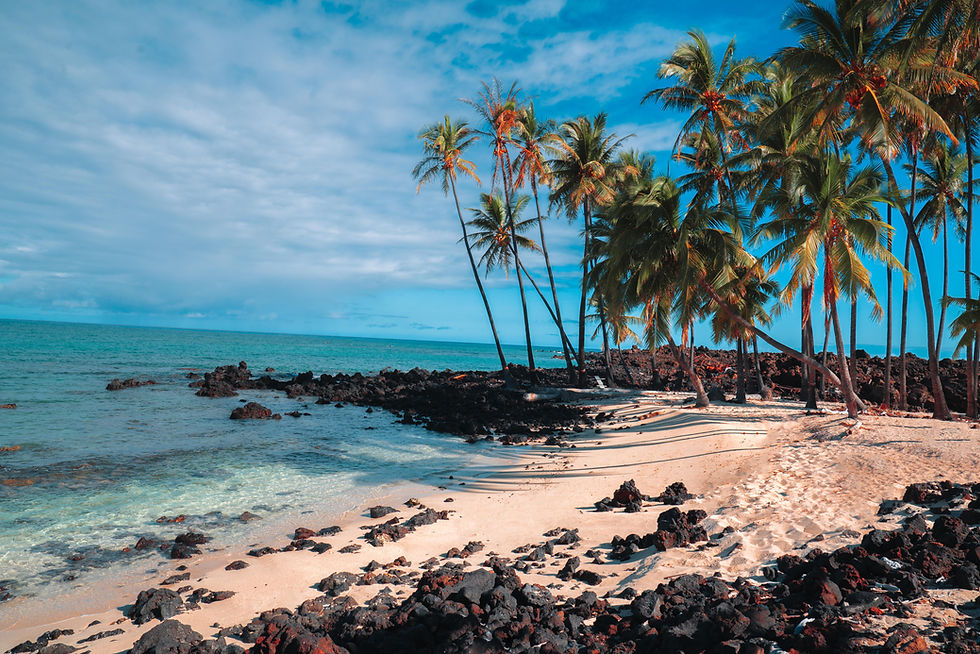
Kona is the island’s most popular region, yet it maintains a relaxed vibe. Its bright blue waters contrast beautifully with black lava rocks and swaying palm trees.
Places to See in Kona
Mauna Kea & Hapuna Beach: Wide, white sandy beaches perfect for relaxation.
Kiholo Bay: A stunning black sand beach surrounded by lava rocks and palm trees.
Kua Bay: A small, sandy beach ideal for swimming in turquoise waters.
Mahai'ula & Makalawena Beach: A secluded beach with lava pools for exploring.
Captain Cook: A historic area with gorgeous coastal views.
Two Step/Honaunau Bay: One of the best snorkeling spots on the island—visit early to spot dolphins.
Things to Do in Kona
Night Snorkel or Dive: Experience the famous Manta Ray Wash where you can snorkel in the dark with giant manta rays swimming over your head.
Kona Coffee Tours: Taste 100% pure Kona coffee, renowned for its flavor and quality
Kona Brewing Co.: Sample local craft beers at this iconic brewery.
Snorkeling: Explore vibrant marine life at countless beaches.
Downtown Kona: explore the town and local restaurants and shops
Places to Stay in Kona
Hilton Waikoloa Village: A sprawling resort with a saltwater lagoon and luxury amenities.
Fairmont Orchid: A serene, upscale resort with a private sandy beach
Mauna Kea Resort: A Marriott Bonvoy property offering luxury accommodations
Waikoloa Beach Marriott: A relaxed Marriott Bonvoy property in the heart of Waikoloa
The Westin Hapuna Beach Resort: A more affordable Bonvoy option near Hapuna Beach.
Four Seasons Hualalai: Unparalleled luxury accommodations but at a higher price tag
2. Ka’u & Puna (South Side)
This quieter region is home to Hawai’i Volcanoes National Park, one of two national parks in Hawaii (the other being Haleakalā National Park on the island of Maui).
Places to See in Ka’u & Puna
Kala’e: The southernmost point of the United States.
Punalu’u Black Sand Beach: The island's most iconic black sand beach. Check out everything you need to know with the Punalu'u Guide.
Hawai’i Volcanoes National Park: Explore Halemaumau Crater and the Thurston Lava Tubes.
Kalapana: Witness the beauty and destruction of lava flows.
Lava Tree State Park: Marvel at unique lava-formed tree molds.
Places to Stay in Ka'u & Puna
Accommodations are limited here. Consider renting an Airbnb or making a day trip from Kona.
3. Hilo (East Side)
Hilo’s lush rainforests and waterfalls are a stark contrast to Kona’s dry climate. Don’t forget your raincoat!
Places to See in Hilo
Rainbow Falls: A picturesque waterfall just minutes from downtown Hilo.
Akaka Falls State Park: A paved trail leads to one of the island’s tallest waterfalls.
Kaumana Caves: Explore lava tubes surrounded by tropical greenery.
Places to Stay in Hilo
Grand Naniloa Hotel: A Hilton property offering comfortable accommodations.
Hilo Hawaiian Hotel: One of the few beachfront options on the east side.
4. Hamakua Coast & Kohala (North Side)
The North Side is serene, with scenic coastlines, hiking trails, and waterfalls.
Places to See in Hamakua & Kohala
Waipi’o Valley Lookout: A breathtaking viewpoint of lush cliffs and black sand beaches.
Pololu Valley Lookout: Another stunning viewpoint with trails leading to the coastline.
5. Mauna Kea (Central)
Mauna Kea is the tallest peak in Hawaii and one of the best places in the world for stargazing. With minimal light pollution, you’ll enjoy a clear view of the stars and galaxies, especially during a new moon. The climate here is VERY different and in the winter you will even find snowy conditions. If you want to take a trip here then you will definitely want to pack some warmer clothes.
Final Thoughts
The Big Island is a destination like no other, offering a perfect blend of adventure, relaxation, and natural beauty. Whether you’re snorkeling in Kona, hiking through rainforests in Hilo, or marveling at volcanic landscapes, the Island of Hawai’i has something for everyone.
Start planning your trip today and discover why the Big Island is truly a paradise worth experiencing


Comments